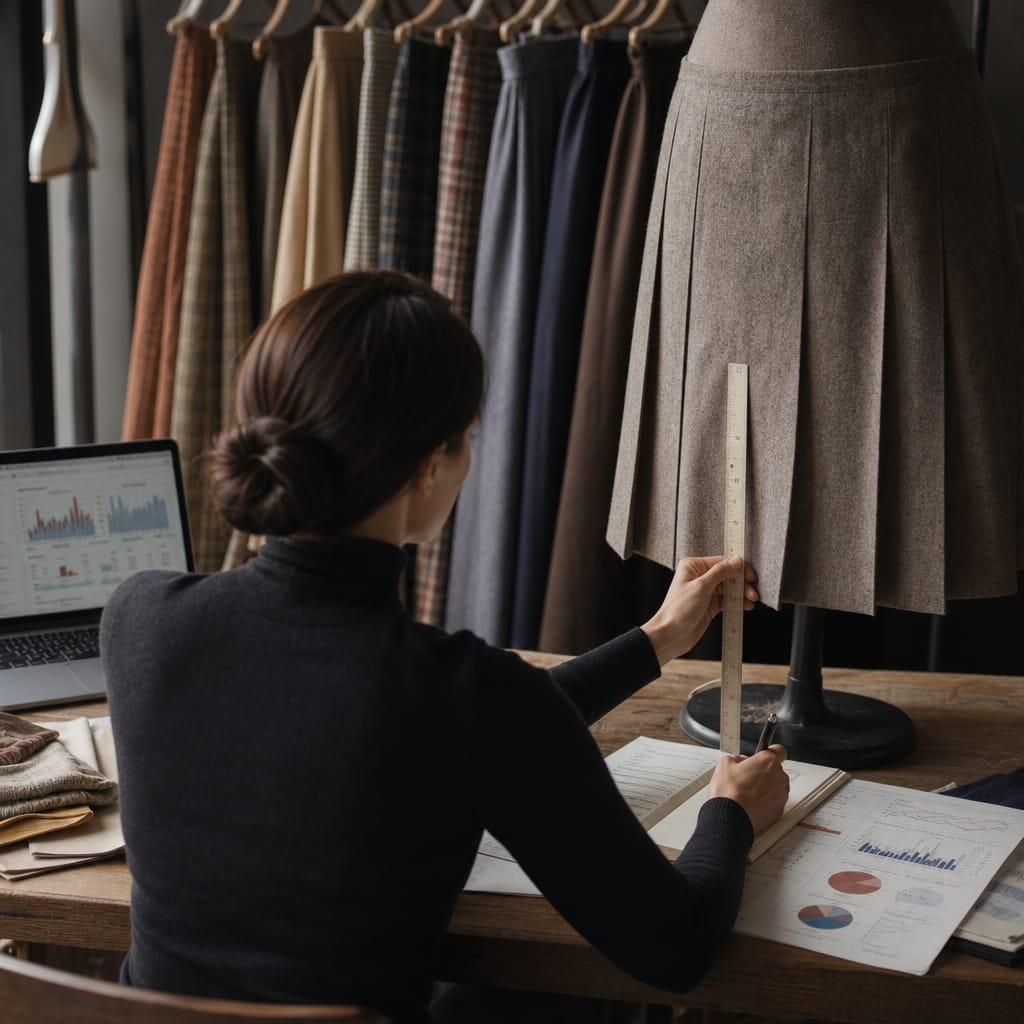
The hemline index is usually credited to an economist called George Taylor in 1926. The claim is that women's hemlines tracked the stock market: up in good times, down in bad. The theory was neat, quotable, and the kind of thing that gets repeated at dinner parties for a hundred years. It was also, it turns out, mostly rubbish.
Taylor’s own 1929 thesis was about the stocking trade: shorter skirts had helped sell silk hosiery. The tidy cycle came later, with Dior’s long New Look in 1947 and the 1960s miniskirt, while 1990s grunge pulled hems down in a boom.
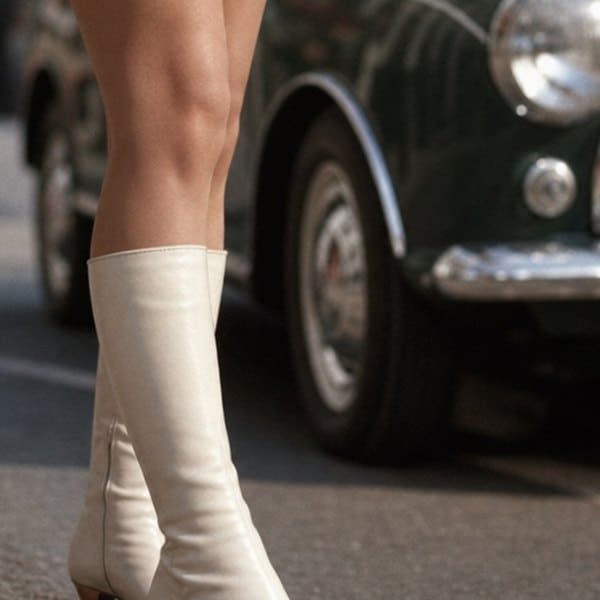
The hemline index has been tested properly a few times since Taylor first floated it. The results are embarrassingly inconsistent. The 1970s – a decade of genuine economic misery, inflation, and power cuts – produced some of the highest hemlines in fashion history. And when longer midi skirts came back during the early 1990s recession, they arrived with florals and bright colours that nobody's idea of austerity dressing would predict. The theory sounds plausible right up until you look at actual clothes.
But strip away the hemline myth and something genuinely stranger is underneath it.
Do any fashion-based economic indicators actually work?
They don't shrink fashion. They distort it.
Leonard Lauder of Estée Lauder popularised the idea of a lipstick effect: the suggested tendency for sales of small, affordable luxuries to rise during recessions while big-ticket spending collapses. Lauder pointed to lipstick sales rising after the 2001 downturn, and the same story is often told about the Great Depression, though later recessions have given mixed evidence. After 2008, cosmetics and fragrance held up remarkably well while clothing sales overall dropped sharply.
The reason, when you think about it, is obvious. A new coat is £200 you cannot justify. A good lipstick is £18 and it makes you feel like yourself again. People still need to feel they have a self worth dressing – recessions don't dissolve that, they just redirect it. You buy the scarf, the earrings, the one statement piece you can actually afford, and you build an outfit around what you already own.
Cheap Glamour, Absurd Opulence, and the Disappearing Middle
The other thing economic pressure does is hollow out the middle of the fashion market. During the 1930s, Hollywood costume design became almost aggressively glamorous – bias-cut silk gowns, dramatic shoulders, a fantasy of wealth on screen for audiences who could not afford their rent. At the same time, patterns for home dressmaking boomed. Women were recreating the look themselves from cheap fabric.
The 1970s stagflation produced the same split. Punk and DIY fashion at one end, ostentatious disco luxury at the other. The diffuse, comfortable middle – the moderately nice thing bought without much thought – is what contracts.
2008 followed the same shape. Fast fashion accelerated dramatically. So, separately, did super-luxury. The mid-range high street retailer is almost always the category that quietly bleeds.
The Part the Hemline Never Measured
What the hemline index missed is that fashion under economic pressure is not about less. It is about differently. The desire to dress well is not a luxury people shed when things get hard; it goes underground and resurfaces as something more resourceful, more extreme, or both at once. The Great Depression gave us Hollywood glamour and feed-sack dresses made to look fashionable enough that manufacturers started printing the sacks in pretty patterns. Because women were using them for clothes anyway.
That is the real story, and it is considerably more interesting than a graph of skirt lengths against the FTSE.
Questions this raises
- Who was George Taylor and what did he study?
- Why do disproven theories like this keep getting repeated?
- What really drives hemline changes?