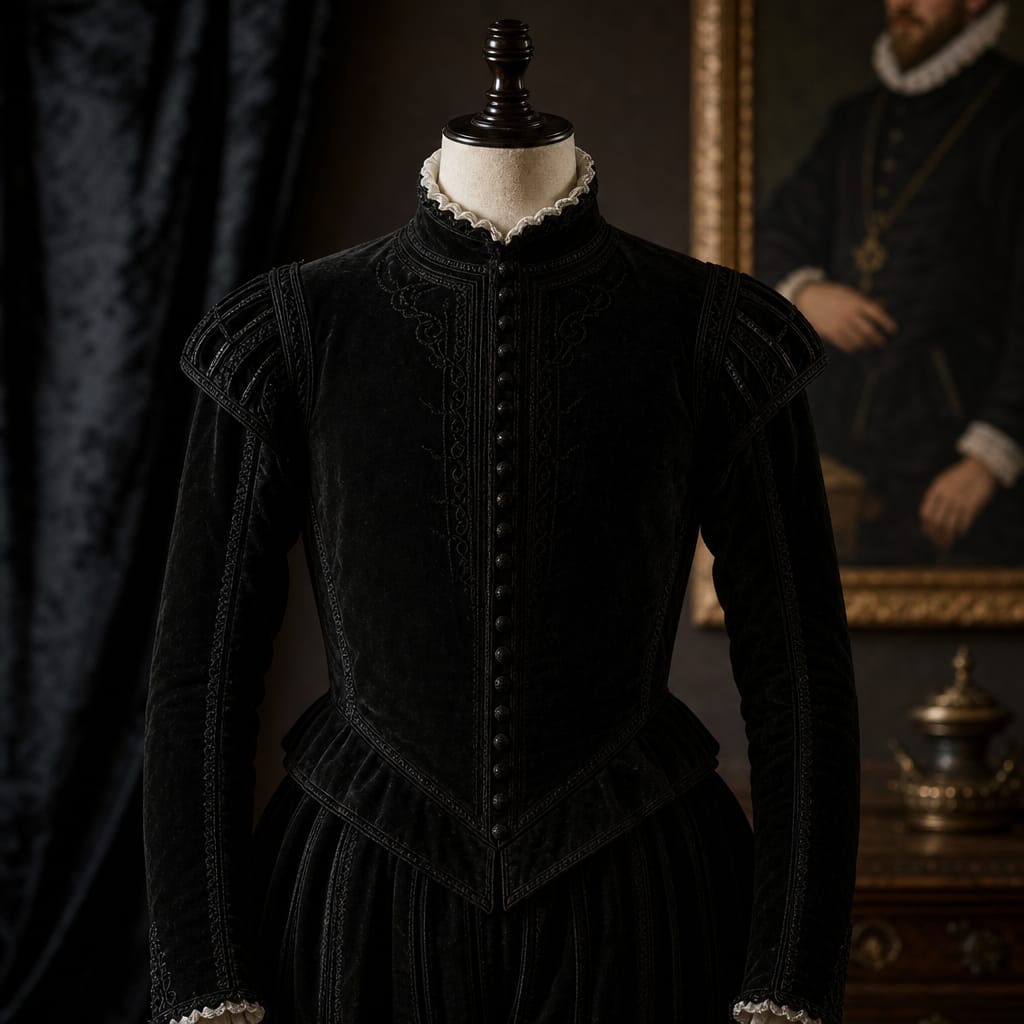
For most of human history, if you turned up to court dressed head to toe in black, people would assume you'd just buried someone, or that you couldn't afford anything better. Either way, they were keeping their distance. The idea of black as cool, as powerful, as the one colour that works for everything from a funeral to a first date – that is genuinely new. Newer than you'd think.
The Dye Was the Problem
The problem was the dye. Achieving a true, rich, lasting black was one of the great technical nightmares of the medieval textile trade. Dyers tried everything: iron compounds, oak galls, walnut husks, mixtures of yellow and blue that faded to a washed-out grey-green within months. Black cloth that actually stayed black was hideously expensive to produce, and most dyers simply couldn't pull it off. What you wore if you were poor was closer to a sort of defeated brown – and if you were unlucky, a defeated brown with greenish patches. Not exactly an intimidating silhouette.
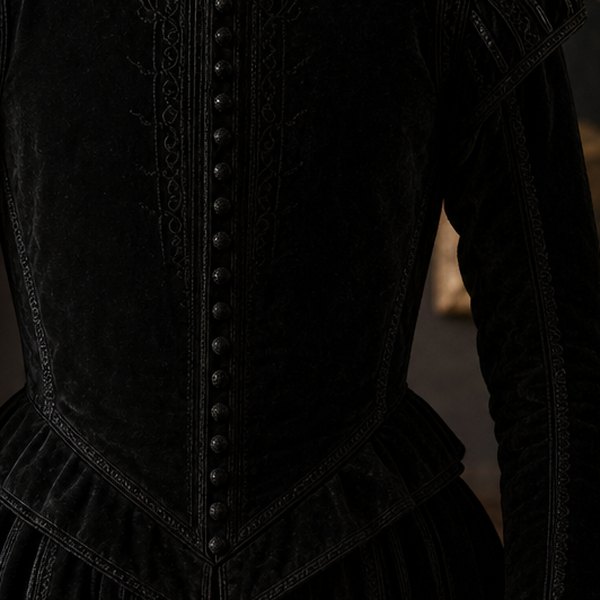
Then, in the fourteenth and fifteenth centuries, something shifted. Spanish and then Dutch dyers cracked a reliable method using imported logwood from Central America. Deep, genuinely black, and durable enough to survive repeated washing. Suddenly, for the first time, a wealthy man could actually dress in black without the colour quietly giving up on him by Tuesday. Wealthy men, being wealthy men, immediately decided this was what powerful people looked like.
Black Becomes the Spanish Court’s Uniform
The Spanish court under Philip II practically made black its uniform. Portraits of the period are almost monochrome – dark figures with white ruffs, radiating the kind of seriousness that says "I own several countries and I am not in the mood." Black became the colour of discipline, intellect, religious gravity. The Reformation helped: Protestant northern Europe associated plain dark cloth with godliness and restraint, as opposed to the gaudy Italian silks that smelled of Catholicism and enjoyable evenings.
By the time Beau Brummell was cutting about Regency London in the 1810s, the dark suit was already assembling itself into its modern form – and Brummell's genius was to show that fit and fabric mattered more than decoration. Then came synthetic dyes in the mid-nineteenth century. Aniline black, discovered almost by accident in 1863, made deep black genuinely cheap for the first time. The colour that had once announced wealth started announcing something else entirely: restraint, refusal, a certain pointed modernity.
Chanel, and a Colour That Shed Its Past
Coco Chanel's little black dress in 1926 is the moment everyone quotes, and it's fair enough. Vogue described it as the Ford of fashion – the same reliable thing that would suit every woman. The comparison is more interesting than it sounds, because Ford's cars also came in exactly one colour. (For a longer look at how domestic taste has its own surprisingly recent history, this piece on The Print Above Your Sofa Is a Very Recent Idea is worth a few minutes of your time.)
What's strange is how completely black has shed every one of its original associations. It was the colour of failure, grief, and a dyer having a bad week. Now it's the colour you reach for when you want to look like you've got it together. A five-hundred-year pivot, and most people wearing it have absolutely no idea.
Questions this raises
- How did dyers finally achieve a true, lasting black?
- When did black become standard for formal wear?
- Why do black clothes fade to grey in the wash?
- Was black always the colour of mourning in Britain?