Somewhere inside the automatic gearbox of a modern family hatchback is a piece of engineering that was designed, in a roundabout way, for a horse. Not for the horse specifically, but for the person who used to sit behind one and had consequently trained themselves to steer with a single hand. That detail sounds like a pub quiz non-sequitur. But it's where the whole story starts.
The One-Handed Driver Problem
When the first proper motor cars appeared in the 1890s, the people buying them had spent their entire lives driving carriages. In a carriage, you hold the reins in both hands most of the time, yes, but you also get very comfortable operating the brake lever, adjusting the lamp, or reaching for your coat with one hand while the horse gets on with the straight bits. Early cars had a lever-operated throttle and a separate gear change that demanded two hands at once, which for people who had graduated from horses felt deeply awkward.
Alfred Horner Munro, a steam engineer from Regina, patented an "automatic" transmission in 1921 specifically to let drivers change speed without that two-handed juggle. His version ran on compressed air, worked poorly, and was quickly forgotten. The ambition, though – a gearbox that thinks for itself – had been stated.
Parts Borrowed From Completely Different Machines
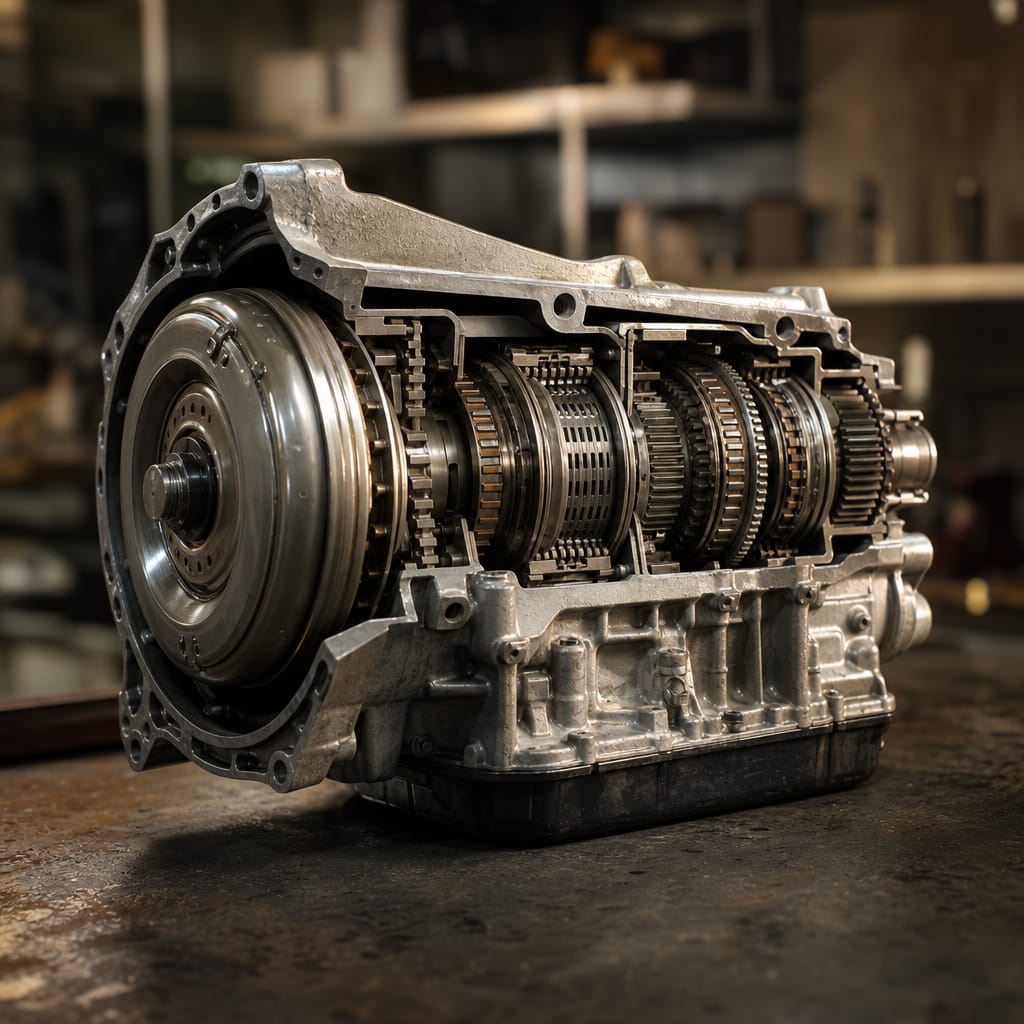
The engineers who took the idea seriously in the 1930s had an interesting solution to the question of how a gear change could happen smoothly without a driver's clutch foot. They borrowed a device from ship propulsion. The torque converter – that fat doughnut-shaped thing sitting between your engine and your gearbox right now – is essentially a fluid coupling first used on marine turbines to transfer power between a steam engine and a propeller shaft without a hard mechanical link. The idea of spinning fluid in a sealed housing to transmit rotation crossed from the sea to the road almost wholesale.
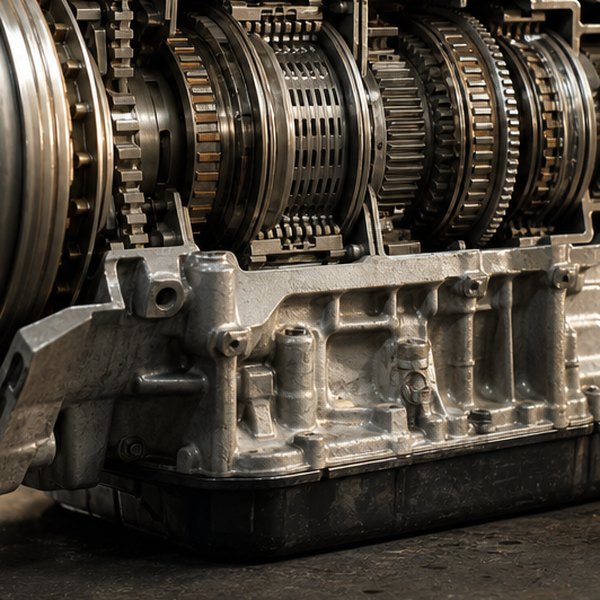
The gears themselves came from an older tradition still. The "planetary" gearset at the heart of every automatic – where small gears orbit a central one like planets around a sun, which is in fact exactly what they're called – was a well-established arrangement in clockmaking and early mill machinery long before anyone thought to put it in a car. It's compact. It's smooth. And it manages multiple gear ratios without anything needing to physically slide in or out of engagement.
Fossils In Formation
What you end up with, in a modern automatic, is this: a solution to a horse-carriage ergonomics problem, implemented using ship-engine hydraulics and clock-gear geometry. None of those original contexts exist anymore. The horses are gone, the marine steam turbine is largely gone, and clockmakers do not make car transmissions. Yet the components they contributed are still in there, doing their jobs, completely unaware of how far they've drifted from home.
The next time your car changes gear for you on a motorway slip road, remember: it was not designed for you, or for that road, or even for that century. It got here by accident, one borrowed solution at a time.
Questions this raises
- Who built the first automatic gearbox, and when?
- How does a torque converter actually work?
- Is a dual-clutch gearbox the same as an automatic?
- What replaced the column gear shift in modern cars?