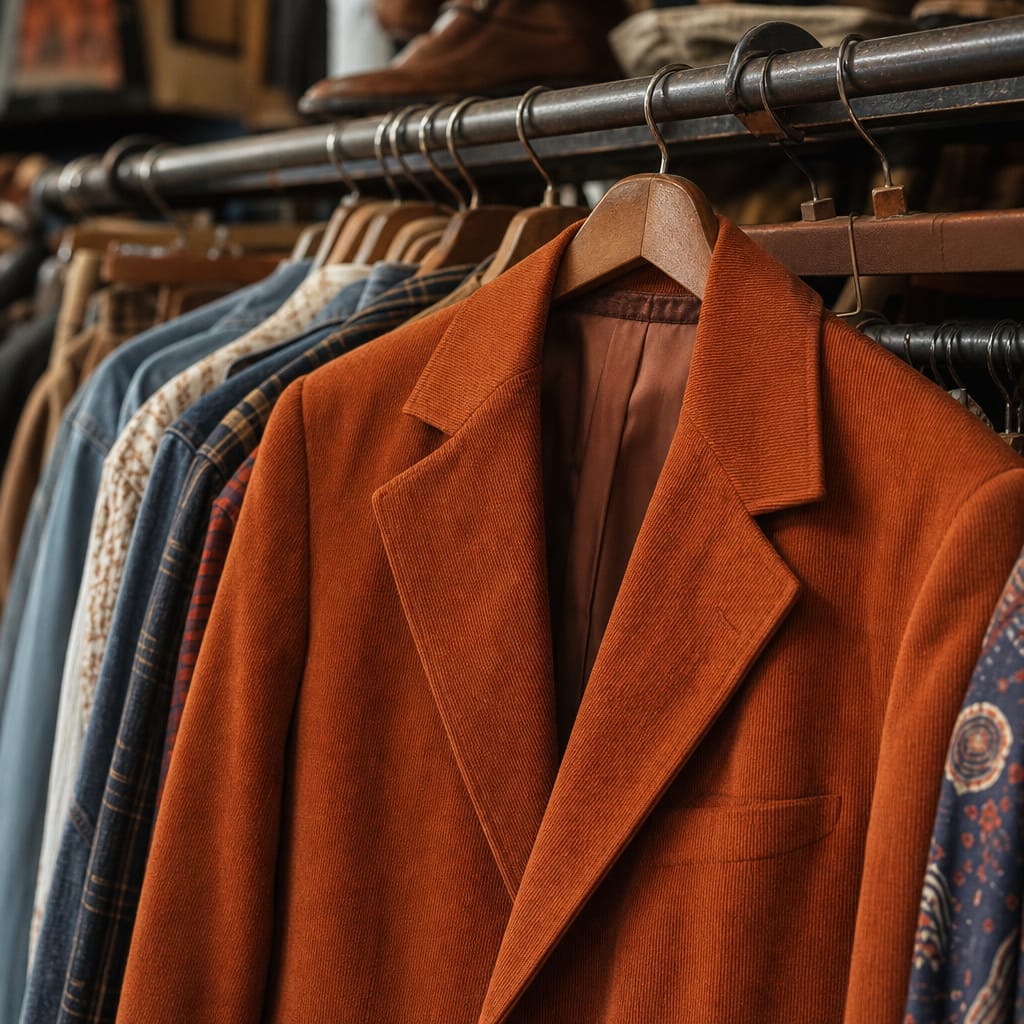
There is a moment, usually in a changing room, when something stops you. A wide lapel. A slightly too-high waist. A shade of burnt orange that you cannot quite place but feel oddly at home with. You buy it. You tell yourself it is new. It is not new – it is roughly twenty years old, and some part of your brain has been quietly waiting for it to come back.
Fashion has always sold itself as change. New season, new silhouette, out with last year's hem and in with this one. But underneath all that breathless novelty, the whole thing is running on a loop – and the loop is surprisingly regular.
Why do trends skip a generation before returning?
Researchers who track fashion cycles – and yes, that is a real job – have noted that dominant trends tend to return on roughly a twenty-year rhythm. Not exactly twenty years. It wobbles. But close enough that you can almost set your watch by it. The nineties minimalism that suddenly looks fresh and modern? Welcome back to roughly 2015. The seventies flares and earthy tones that keep reappearing? That was the mid-nineties arriving back on schedule.
The mechanism is generational. The people who have enough money, confidence and cultural clout to set trends are broadly in their mid-twenties to mid-thirties, and the era they feel most warmly about is not their teens – teenage fashion is too raw, too close, still slightly embarrassing. It is earlier. The half-remembered world of age seven or eight, when the colours around you felt like safety and comfort rather than identity. That is the era they unconsciously reach for when they start making choices.
The Feeling Is Real, Even If the Memory Isn't
The clever bit is that the nostalgia doesn't need to be accurate. You are not remembering a specific pair of trousers. You are remembering the emotional temperature of a time – the carpet in a relative's house, the cover of a VHS tape, the colour of a popular car. Fashion borrows that feeling and stitches it into something new enough that you don't immediately clock where it came from.
This is why trends feel simultaneously fresh and familiar when they work. The unfamiliarity makes it interesting; the buried familiarity makes it feel right.
Why the Industry Needs You Slightly Confused
If you fully recognised the cycle, you might just wait. You might fish the original out of a charity shop, or simply hold onto what you have. The industry does not want that – it wants you to experience each revival as novelty, a genuinely new creative moment rather than a scheduled exhumation.
This is not cynical exactly. The people designing the clothes are often genuinely excited by what they are making, subject to the same generational pull as everyone else. They are not sitting in a room deciding to bring back corduroy. They simply find themselves drawn to corduroy and cannot fully explain why.
Which means the most radical thing you can do in fashion is know roughly what is coming next. Your teenage wardrobe is probably not embarrassing. It might just be a little early.
Questions this raises
- Is the twenty-year fashion cycle getting shorter?
- Does the same cycle apply to menswear?
- Which decade is due a comeback next?