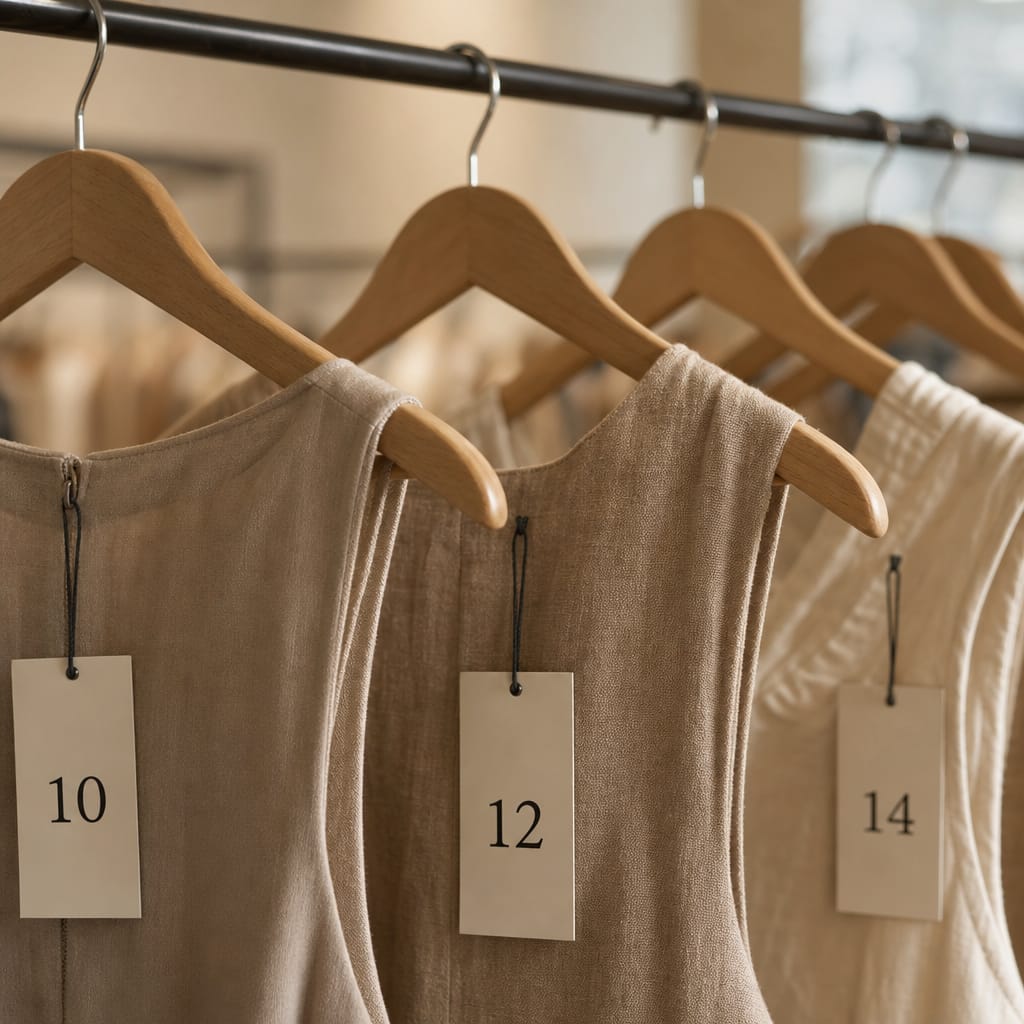
Pull a dress off the rail in one shop, try on the same size in the next shop along, and suddenly you're apparently a different person. A size 12 in one changing room, a 14 in the next, somehow back to a 10 in the third. You haven't changed shape between shops. The number has just quietly meant something different each time, because it was never tied to anything real in the first place.
Here's where it all started. And it's a stranger story than you'd expect.
The Army Needed Trousers, and Accidentally Invented a Problem
In the 1940s, the US military needed to mass-produce uniforms for millions of conscripted soldiers and had no consistent system for doing it. So they measured a huge number of men and tried to find patterns in the data – chest, waist, inseam, the works. The idea was to build a set of "standard" sizes that would map onto real bodies and let factories churn out clothes that would actually fit most people.
It half-worked. For men, roughly, in a military context. Then the fashion industry borrowed the idea, stripped out most of the nuance, and applied it to women's bodies, which are considerably less cooperative about conforming to neat numerical categories. What you got was a system that was always more aspiration than science.
What is vanity sizing?
Here's the actual trick: over the past few decades, the physical measurements attached to any given size number have crept steadily upward. A size 12 today is cut larger than a size 12 was in the 1970s – the number stayed the same while the garment got bigger. This isn't accidental or even cynical exactly. It's competitive. One brand quietly recuts its patterns a little larger so that customers feel pleasingly slim in its changing rooms, buy more readily, and come back. The next brand notices and does the same. Nobody co-ordinated this. It just drifted, one small adjustment at a time, across the whole industry.
The pull is psychological. Someone who expects to be a 14 and finds a 12 fits gets a small lift, and comes back to that shop. Nobody planned the drift; it crept in a season at a time, which is why sizes vary so much between chains.
So the number on your label isn't measuring your body at all. It's measuring a brand's calculation about what will make you feel good enough to hand over your card.
What the Number Is Actually Telling You
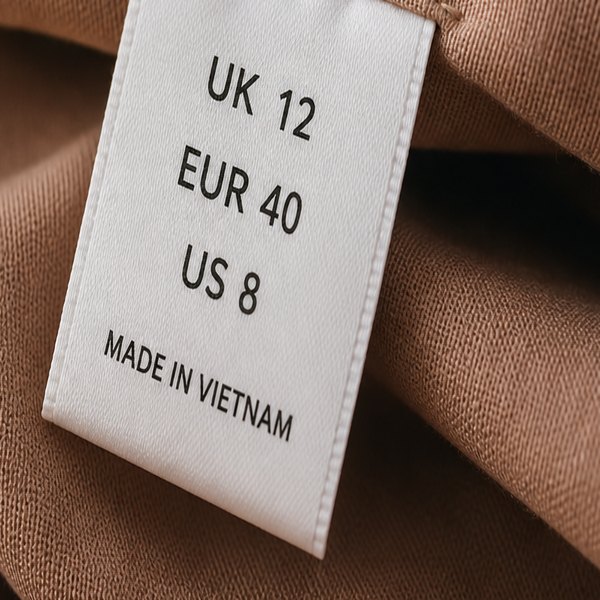
Different countries even use different scales. A UK 12 is roughly a US 8, roughly a European 40, and none of those numbers connects to a measurement in centimetres or inches that you could verify with a tape. Some brands have recently moved to using actual body measurements on their labels – waist in inches, inside leg in centimetres – partly because online shopping exposed the chaos in spectacular style. When you can't try it on first, you need a number that means something.
The most honest label in your wardrobe is probably your jeans, where the waist and leg measurements are right there. Everything else is a retailer's best guess, dressed up as a fact.
Which means the size you are isn't a size at all. It's just whoever guessed most accurately this season.
Questions this raises
- Why do sizes differ so much between UK shops?
- Is there any legal standard for clothing sizes?
- How do I buy by measurements instead of size?