There's a particular kind of smugness that descends on a person the day they finally finish decorating a room. The last wall is done, the skirting boards are gleaming, the new floor is clicked into place. You stand in the doorway, arms folded, and think: right. That's sorted. And then the house, very slowly, very quietly, gets on with undoing it.
This isn't bad luck or poor materials. It's just physics. A house isn't a fixed object – it's a collection of organic and semi-organic materials all moving at slightly different speeds, responding to heat, cold, moisture, and time. The finished room you walked away from is already changing. You just can't see it yet.
How long does new plaster take to fully dry out?
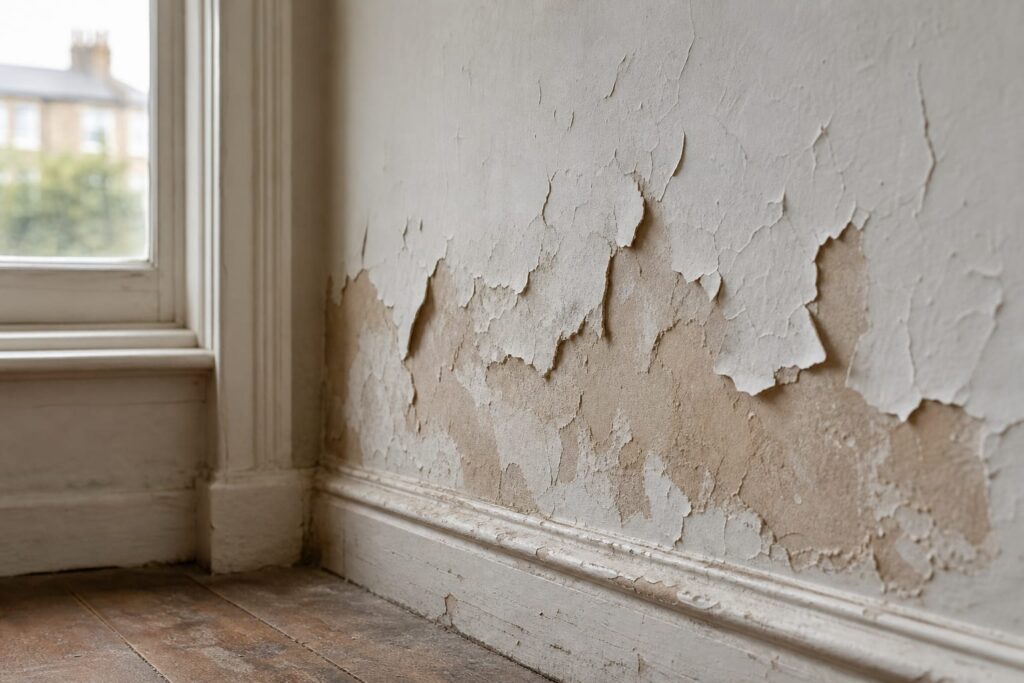
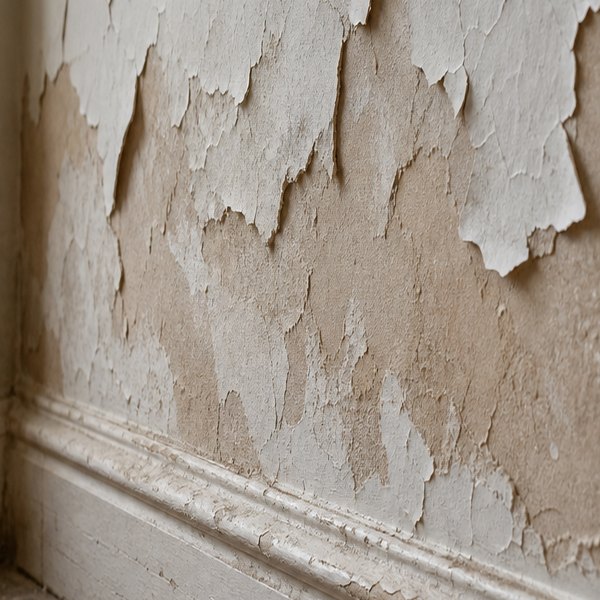
Take plaster. Fresh plaster on a wall looks inert once it's dried, but it's still doing something. Plaster is mildly alkaline and hygroscopic, which is a fancy way of saying it keeps drawing moisture from the air and releasing it again, every single day, for years. That's why paint can flake off walls that feel perfectly dry – the surface is cycling through tiny amounts of moisture that the paint film eventually can't keep up with. Victorian houses built with lime plaster were actually designed around this: lime is more flexible and breathable than modern cement-based alternatives, which is why older homes often shrug off the kind of damp problems that blight 1970s builds. The wall, in other words, has always needed to breathe. Paint that seals it too hard is working against the building, not with it.
Timber Moves With the Seasons
Then there's wood. A real timber floor will move by a millimetre or two between a dry summer and a damp winter – not because it's warping, but because that's what wood does when humidity changes. Moisture makes the fibres swell across the grain; dry air shrinks them back. This is why decent floor fitters leave an expansion gap around the room's edge. It's not laziness or oversight; it's an admission that the floor is a living thing with its own schedule. Gaps that open up in January and close again in March are the floor simply breathing. Worry about it more if it stops.
Paint Is Fading While You Look at It
Paint has its own quiet drama playing out in the light. UV radiation from ordinary daylight slowly breaks down the binders in paint film – the stuff that holds the pigment together – and the surface gradually chalks back towards powder. Run a finger along an older exterior wall and come away with a fine white residue, and that's not just dirt: that's the paint returning, very slowly, to its raw ingredients. Gloss paints on south-facing walls can do this within five or six years in British conditions. The wall isn't deteriorating, exactly. It's just remembering what it was made of.
There's something almost philosophical in all this, and it reminded me of a piece I came across recently about an artwork that was restored twice after its creator put it down, because time and matter kept quietly altering what had been "finished" – The Painting You're Looking At Isn't The One That Was Painted – which is, when you think about it, exactly what a house does to itself. The painter puts the brush down; the house puts the roller down. Both keep changing anyway.
Why do hairline cracks keep coming back after decorating?
The practical upshot of all this is that treating a home as a finished object is a bit of a category error. That crack reappearing every autumn above the back door isn't a sign of structural doom – it's the lintel expanding and contracting with the temperature. The tide mark that shows up on a north-facing wall after a wet winter isn't a leak so much as condensation finding the cold spots. Neither needs panic. Both need understanding.
A house that's settling, breathing, chalking, and swelling slightly with the seasons is a house that's working correctly. The ones to worry about are the ones that have been sealed so thoroughly – with external renders, impermeable paints, double-coated foil insulation crammed into the wrong places – that none of that movement has anywhere to go.
The room you just finished decorating looks perfect right now. Give it a year. Give it five. It's got plans of its own.
Questions this raises
- Should you wait before painting a new extension?
- Does central heating make timber shrinkage worse?