Before you've touched the kettle, your brain has already had the coffee.
Not metaphorically. The moment you hear the alarm, or smell the air, or register the particular grey light coming through the curtains, your brain releases a small hit of dopamine in anticipation of everything it knows is coming next. The coffee, the scroll, the first proper exhale of the day. The reward fires before the reward arrives – which means by the time you're actually standing in the kitchen, you're not chasing a feeling. You're catching up to one your brain already spent.
This is the bit the standard habit advice quietly skips over.
Does the cue-routine-reward loop hold up in research?
You've probably heard the loop: cue, routine, reward. Do a thing enough times after a trigger and eventually it becomes automatic. True, as far as it goes. But the part that actually cements a habit isn't the repetition of the action – it's the repetition of the anticipation. Your brain is less interested in what you do than in what it's learned to expect. The craving is the mechanism. The thing you do is almost incidental.
This is why "just don't do it" is such terrible advice for breaking a habit. By the time you're deciding whether to reach for your phone, your brain has already fired. The wanting happened upstream of the decision. Willpower is just you trying to argue with a signal that's already been sent.
How a Morning Gets Wired In
Think about a fairly ordinary morning. The alarm goes. Within seconds, before you've thought anything deliberate, your brain has already begun queuing up the next several minutes in order – not because you decided to, but because it's run this sequence a few hundred times and built a kind of shortcut for it.
The coffee smell is part of it. So is the mug you always use, the particular click of the kettle, the posture you fall into at the kitchen counter. These aren't just accompaniments to the habit – they're the triggers that keep firing the anticipation signal, one after another, like dominoes. Each small cue primes the next. The whole routine has quietly become a chain of tiny cravings.
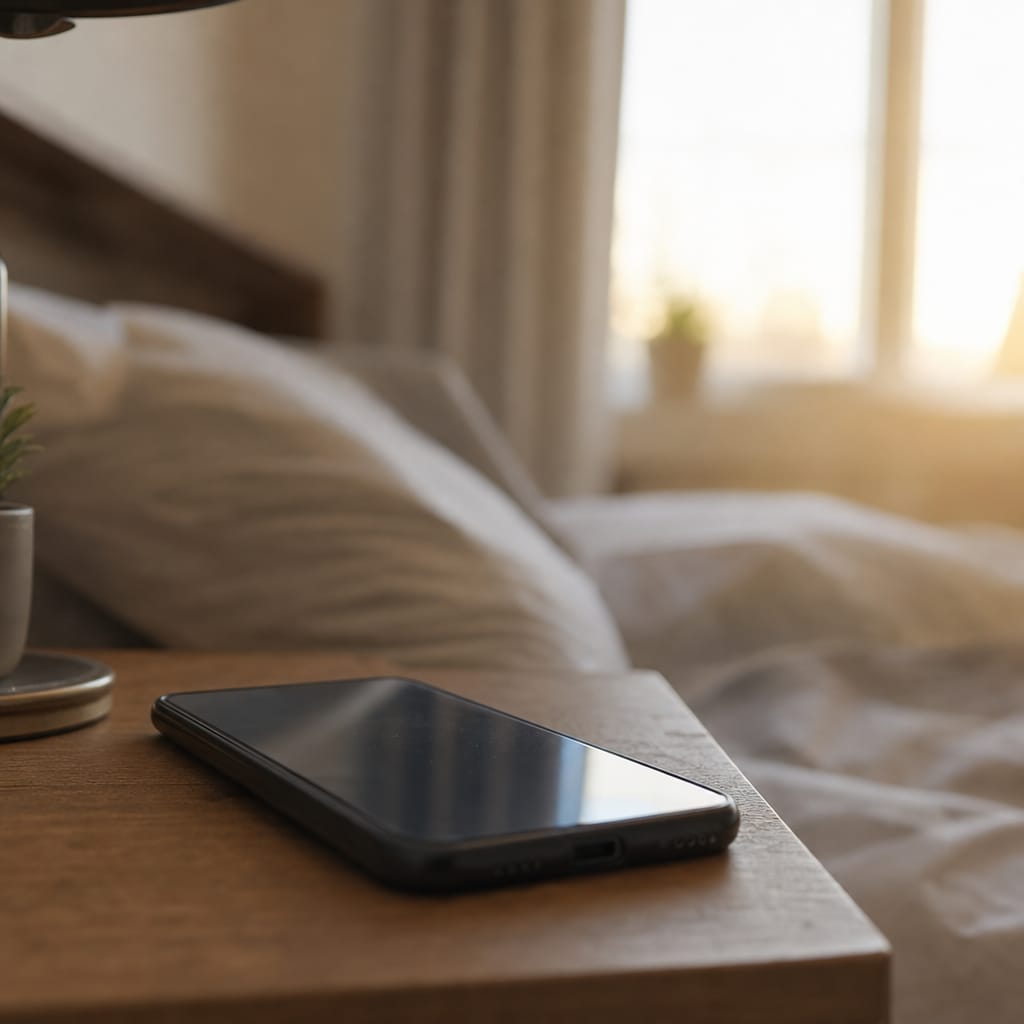
Your phone works the same way. The moment of waking is the cue, the scroll is the action, the unpredictable little drip of new information is the reward – and because that reward is unpredictable, your brain gets especially good at anticipating it. Variable rewards are crack cocaine for the anticipation circuit. The slot machine principle, in your hand, first thing in the morning.
Can you rewire a morning routine you dislike?
If you want to shift a habit, the only lever that works is the cue – because that's where the craving starts. Swap the mug. Move the phone charger out of the bedroom. Change the first thing you see when you walk into the kitchen. It sounds almost insultingly small. But you're not trying to overpower a behaviour with willpower; you're trying to interrupt the anticipation before it fires.
Your brain, given a slightly different morning, will eventually learn to anticipate that instead. It's not fussy about the content. It just wants to know what's coming next.
Which, if you think about it, is a generous design. Your brain isn't addicted to coffee or scrolling or any specific thing. It's addicted to the reliability of the sequence. Mess with the sequence and you've already done most of the work.
Questions this raises
- Why does anticipation feel stronger than the reward itself?
- How long does it really take to form a habit?