Somewhere in the National Archives there's a military recruitment ledger from the early 1940s that, if it could talk, would absolutely ruin your appetite. When the army started processing conscripts in any serious number, the medical examiners kept finding the same thing: young men who were technically old enough to fight but whose bodies told a different story. Stunted growth. Rotten teeth. The physical signatures of childhoods spent genuinely short of food. Not wartime food – food from before the war, in peacetime, in the richest industrial nation on earth.
That discovery didn't stay in the medical files. It walked straight into Parliament.
The Clause Everyone Forgot
The 1944 Education Act gets remembered almost entirely for grammar schools – the eleven-plus, the sorting of children into academic sheep and vocational goats. That debate still runs hot. But tucked inside the same legislation was something far less glamorous and arguably far more consequential: a legal duty on local authorities to provide a school meal to every child who wanted one. Not a charitable gesture. Not a nice-to-have. A statutory obligation, with specific caloric requirements and a controlled price that couldn't be set so high as to exclude poorer families.
The logic was blunt: you cannot build a fighting nation out of malnourished civilians. And since the damage was being done in childhood, the place to fix it was school. So for the first time, what a child ate between nine and three o'clock became a matter of national law.
For a few decades it worked, more or less. By the 1970s, the school dinner – shepherd's pie, semolina, the whole ritual – was woven into British childhood so completely that people wrote nostalgic columns about it well into middle age.
The Quiet Dismantling
Then 1980 arrived, and a different political logic took over. The Education Act of that year removed the requirement that school meals meet any nutritional standard at all. Local authorities still had to provide something, but what that something contained was nobody's legal business anymore. Over the following years, contracts went to the cheapest bidder. Kitchens were stripped out. And "school meals" increasingly meant a tray of whatever a catering company could produce at the lowest possible unit cost.
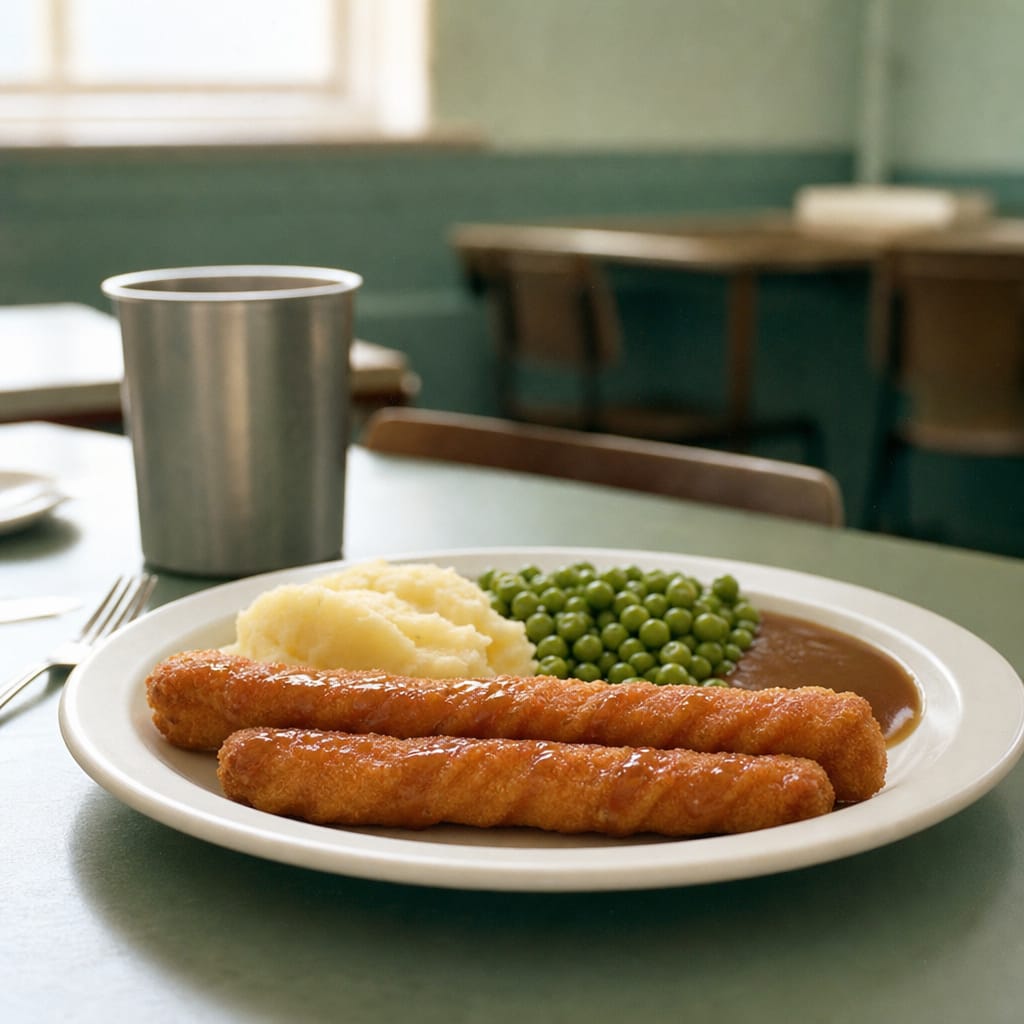
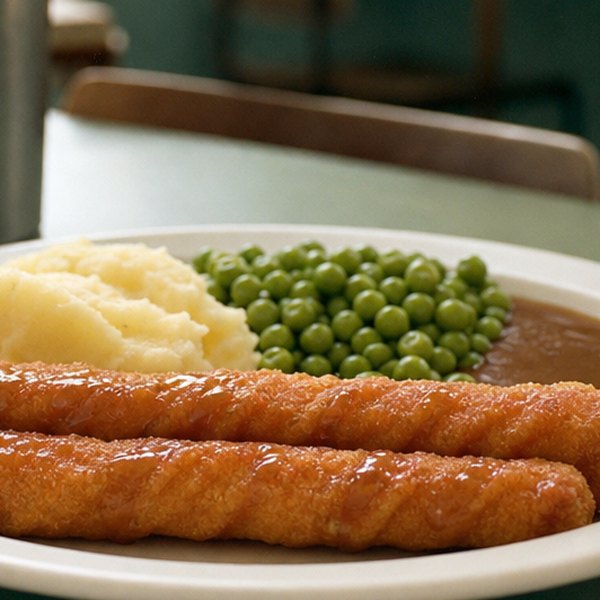
Which is how, by 2004, a Turkey Twizzler – a spiral of reconstituted meat, fat, and flavourings shaped like a novelty toy – became a representative sample of what a British primary school called lunch.
How did Jamie Oliver’s campaign change school food standards?
Jamie Oliver's 2005 Channel 4 series filmed school kitchens, calculated the nutritional content of what was being served, and broadcast the results to several million people eating their own dinner at home. The public reaction was not measured. Parents were furious, MPs were embarrassed, and within a year statutory nutritional standards for school meals were written back into law – legally binding minimums covering fat content, sugar, fruit, vegetables, and protein, enforced by Ofsted.
So the direct legal ancestor of those standards isn't a nutrition study or a government inquiry. It's a television programme. The 1944 military recruitment crisis created the duty; a celebrity chef's camera crew restored it.
Your child's school cannot serve mechanically recovered meat shaped like a corkscrew not because of any grand educational principle, but because a documentary embarrassed a government into action. The army doctors of 1942 would probably find that funny. And also deeply familiar.
Questions this raises
- Why did the 1944 Education Act make school meals compulsory?
- Are free school meals still a legal duty in England?
- What was actually in a Turkey Twizzler?